
New teachers, new shoes, old friendships rearranged by three months apart. Somebody got prettier. Somebody got awkward. Somebody discovered a new crowd. Somebody spent the summer acquiring the confidence that another girl will spend September trying to take from her.
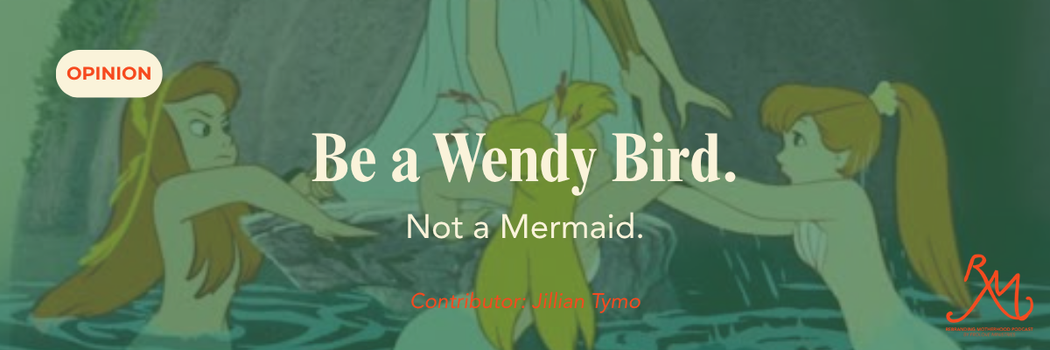
J.M. Barrie understood the terrain. The mermaids in Peter Pan lounge together on Marooners’ Rock, combing their hair and enjoying Peter’s attention. Wendy fascinates them only as an object of hostility. They refuse her friendship. They splash her deliberately. Barrie writes that she never receives “a civil word” from any of them. They inspect Wendy, mock her clothes, crowd around Peter, push her toward the water and laugh when she objects. Peter dismisses the episode as harmless fun.
Clique aggression has changed its technology more than its method. Psychologists Nicki Crick and Jennifer Grotpeter gave the phenomenon a formal name in their 1995 study: relational aggression. They studied 491 children in third through sixth grade and found girls significantly more relationally aggressive than boys. Earlier aggression research had concentrated heavily on hitting, kicking and other overt behaviors. Crick and Grotpeter measured attempts to damage another child through relationships and social standing. Their findings also linked relational aggression with rejection, loneliness, depression and isolation.
Psychologists who specialize in aggression John Archer and Sarah Coyne later reviewed the literature on indirect, relational and social aggression and found enough overlap to treat them as versions of the same basic strategy: harm the target’s social status while reducing the aggressor’s exposure to direct retaliation. Gossip and rumors and exclusion work to socially isolate the target and elevate the social status of the mean girl.
For girls, this matters especially during later childhood and adolescence. John Archer’s meta-analysis found higher female indirect aggression concentrated most clearly in those stages, though measurement method affected the size of the difference. Other work has found girls more likely to describe disliked peers through relationship manipulation, ostracism and malicious rumor, and research with adolescent girls specifically identifies gossip, rumor spreading, relationship sabotage and exclusion as recurring aggressive strategies.
The mermaids in the lagoon possess beauty, proximity to Peter, and membership in the group. Wendy threatens none of those things objectively, but rivalry does not need an objective threat, just comparison.
Psychologist Tracy Vaillancourt has examined indirect aggression as a form of female intrasexual competition: aggression can police rivals through reputation, desirability and social position while allowing the aggressor to avoid the costs that accompany direct physical confrontation. Barrie stages the same contest in miniature. Peter supplies the desirable attention. The mermaids notice another girl near it, so social punishment follows.
Most girls will never throw another girl into a lagoon. They may learn every smaller gesture required to make her feel as though they could. A lunch table can suffice, or a sleepover list, a screenshot, a joke repeated in the right company, or a confidence transferred under the guise of concern. Relational aggression rewards finesse, because the aggressor can injure and preserve deniability at the same time.
Wendy is a force to be reckoned with, though. She uses her strength well. Wendy operates consistently in a sequence: she discerns, judges conduct, answers it, accepts responsibility, and corrects herself when necessary.
When Peter kicks John out of bed at their first meeting, Wendy “told him with spirit that he was not captain in her house.” She later decides he meant to be kind and relents. She neither submits to his charisma nor nurses the offense once she judges it forgivable.
During the flight to Neverland, Wendy watches Peter toy with Michael’s safety. Peter can rescue a falling child at the last possible second and enjoy the drama, but Wendy cannot enjoy it because she remains responsible for her brother. Throughout the story, she maintains what Peter forgets: fatigue, danger, promises, home, parents, consequences. Wendy is a stakeholder to responsibility even as Neverland works its amnesiac magic on John and Michael. Their memories begin to erode. Michael starts losing his grasp on Mrs. Darling. Wendy recognizes the danger and decides to go home.
Peter does not forge long term memories sequenced into deepening understanding because forgetting perpetuates Neverland. If I remember who my mother is, I owe something to home. If I remember what happened yesterday, today’s conduct carries consequences. If I remember who I have been, I can measure who I am becoming. While Wendy tethers herself to duty increasingly by using Neverland as a contrast to the real world, she can endure its allure while noting its deficits.
In the Nicomachean Ethics, Aristotle treats character as something habituation forms. Childhood is formative because repeated actions and emotional responses create dispositions. Practical wisdom, phronesis, develops as a person learns to see what a particular situation requires and acts accordingly. Rules alone cannot supply it: growing up requires empirical living.
We have a motto in our family: I am who I need to be in any given situation, regardless of the circumstances. I mean it in that Aristotelian sense: circumstances change, but character should remain consistent so as not to distract us from the opportunity we have every day to live life well. Every repeated action forms a part of you. Every contemptuous joke trains contempt. Every courageous defense trains courage. Every indulgence of jealousy makes the next indulgence easier. Character grows through use.
Wendy could comfort lost boys, reorient her brothers, and stand up to pirates. She reflects on her goals, the implications of staying in Neverland, she weighs sacrificing time and connects that maturely to the impact on her future goals of being a mother. She deals with her jealousy of Tiger Lily and learns from it. This is ultimately the driving logic behind her returning to London.
When the Lost Boys ask her to become their mother, Wendy admits, “I am only a little girl. I have no real experience.” Then she accepts the responsibility. She manages bedtimes, checks injuries, gives medicine, and tells stories. She expects order, though, and recognizes when she is the only force driving order. She knows this will eventually exhaust her and it, too informs her decision.
Wendy’s maternal nature functions as a form of civilization. Since Neverland runs on appetite and immediacy, and Peter wants adventure, everyone adventures. If Peter tires of something, it disappears from his attention. The boys stay up because staying up feels glorious. Danger becomes entertainment, and yesterday barely exists. They are disinterested in continuation because culmination of consequence is an indication of growing up, which would dissipate the magic of Neverland, so they accept the implications for forgetfulness and settle for perpetuation of fun. Their glee is dampened by perspective, which is the central tension between Wendy and Peter.
On Hook’s ship, the pirates capture the children. Hook threatens the boys with death. Barrie writes, “At this moment Wendy was grand.” She does not disintegrate into panic. She speaks to the boys as though courage still belongs to them. Hook cannot force her to join his moral universe simply because he controls the deck. If a room dictates your character, the cruel room makes you cruel
Researchers who studied adolescent relational aggression across seven years found that most participants followed a low, decreasing trajectory, while a smaller group developed high and increasing relational aggression; peer, sibling, parental, and media influences helped predict those patterns.
Lauren E. Sherman is a social psychologist and neuroscientist whose work focuses on adolescent peer influence, social media, and how online social feedback affects behavior and the brain. Sherman and her colleagues created an Instagram-like experiment for adolescents and found that visible likes altered behavior. Teenagers liked photographs more often when the same photographs appeared to have many likes. The effect extended to risky images, and highly liked photographs activated brain regions associated with reward, social cognition, imitation and attention.
Solomon Asch, a psychologist whose work focused on conformity experiments, found the older version of the same vulnerability decades before the smartphone. Participants faced an obvious visual judgment about line lengths. When a unanimous group deliberately chose the wrong answer, subjects sometimes abandoned the evidence in front of their own eyes and joined the majority. Likes show a girl how many others approve of her before she forms her own judgment, shares show momentum, and comments indicate the perceived norm. Evidence is either mounted in her favor or against her.
René Girard was a French historian, literary critic, and social theorist who spent most of his academic career in the United States, ultimately as a professor at Stanford. His work crosses literature, anthropology, psychology, philosophy, and theology. His theory of mimetic desire begins with imitation: we take cues from one another about what deserves desire, attention and rivalry. As mimetic competition intensifies, the object itself can matter less than the contest surrounding it. Girard then traces a darker social development: rivalry spreads, a group converges upon a victim, and collective accusation restores unity through the scapegoat. Scholars continue to debate the reach of Girard’s larger anthropology, though his account of imitation, rivalry and scapegoating remains a powerful framework for reading group behavior.
This brings us to the Wendy Bird. Before Wendy even lands in Neverland, Tinker Bell converts jealousy into group action. The Lost Boys see a tired figure flying overhead. Nibs calls her a “great white bird.” Slightly decides there must be “birds called Wendies.” Tinker Bell gives the command: “Peter wants you to shoot the Wendy.”
The boys never check their sources and, since they are of a volitionally forgetful nature, they provide each other no context for understanding the proposed action. Barrie gives their reasoning in one chilling sentence: “It was not in their nature to question when Peter ordered.”. They shoot her.
Jealousy supplies the motive. A label strips the target of individuality. An authority claim legitimizes aggression. The group provides confidence. Nobody verifies the story. Participation demonstrates loyalty. Wendy absorbs violence that Tinker Bell could never have inflicted alone.
Some girls will Wendy Birds this school year. Someone will decide what you meant before asking you. A group will repeat a story because repetition feels like corroboration. Girls who barely know you may acquire astonishing confidence about your motives. Another girl may need everyone else to misunderstand you because her own grievance cannot carry enough weight alone. You cannot let that defeat you.
Wendy survives the arrow and keeps developing. She cares for her brothers, establishes order among the Lost Boys, confronts Peter, and stands up to pirates. She faces her jealousy of Tiger Lily and learns from it. This is not always easy for Wendy: she feels briefly disloyal to him for growing, then keeps growing anyway. Barrie writes that Wendy becomes one of those who “likes to grow up.” In the end, she does it “of her own free will.”
Peter remains magnetic, but unchanged while Wendy acquires the capacity to leave. The alternative to the Mermaid isn’t becoming harmless. Wendy has plenty of force. She simply directs it toward formation rather than domination by protecting boundaries, caring for people, maintaining standards, acquiring knowledge, remembering home, and becoming someone capable of leaving Neverland and thriving in the real world.
That seems like a worthy ambition for girls heading back to school. Learn the material, find your friends, contend with yourself daily. Notice cruelty before the group teaches you to call it humor. Hold another girl accountable without making her destruction entertainment. Accept correction before haughtiness hardens into character. Resist the strange thrill of consensus if it means surrendering judgment. Care for whoever requires your care.
And if they call you the Wendy Bird, keep flying long enough to grow up. On this side of life, it’s worth it, I promise.
Jillian Tymo is a researcher, writer, and host of the podcast “Rebranding Motherhood,” founded by Dr. Abby Johnson and produced by ProLove Ministries. She examines culture, politics, and religion through her work and academic studies at Georgetown University.
Instagram: @jilliantymo @rebrandingmotherhoodpodcast